Category: Security Challenges
-
Axis of Evil
?What exactly is the Axis of Evil
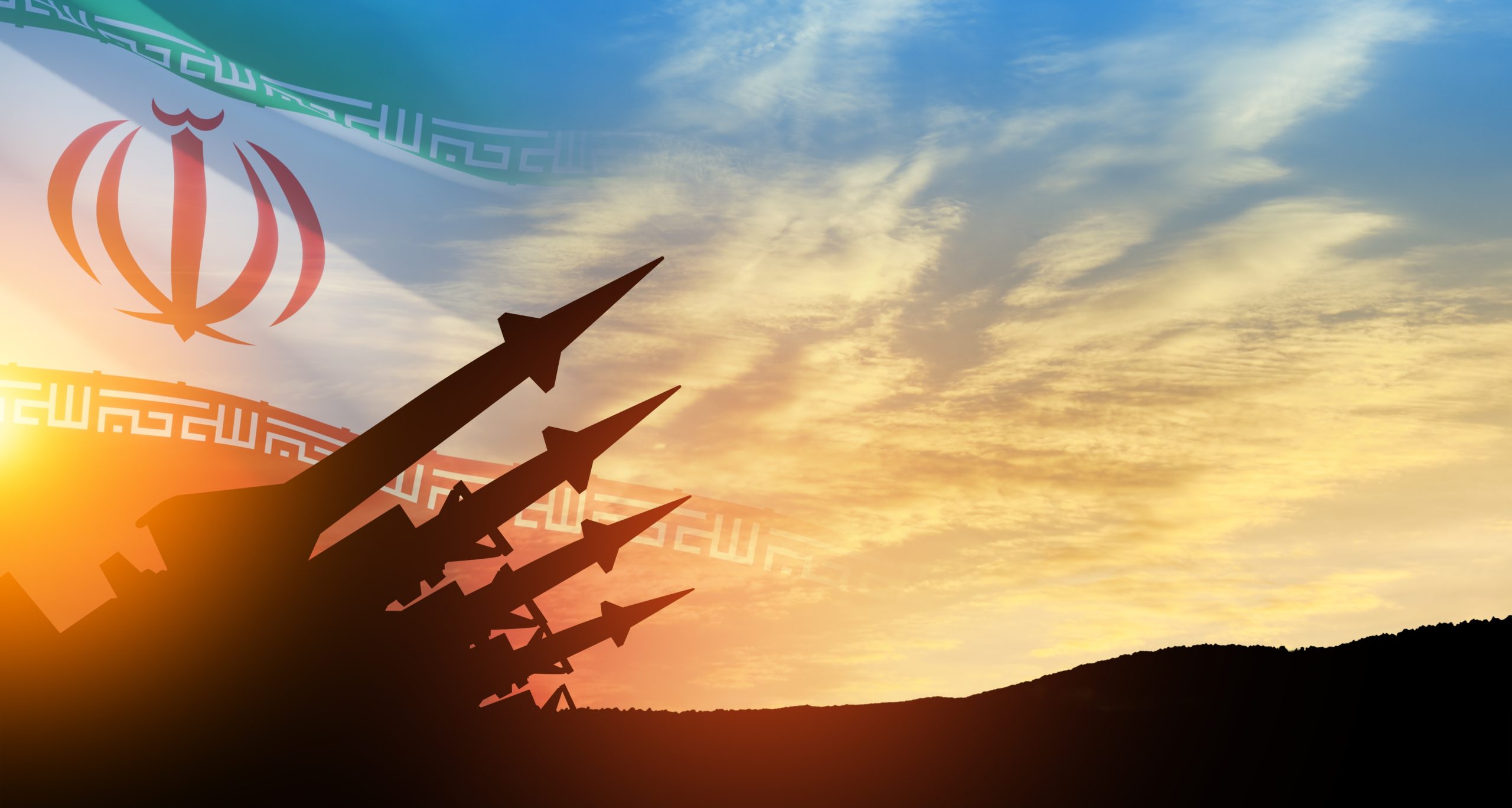
Imagine a group of countries and organizations coming together with a shared goal: to oppose the US and Israel violently. This is exactly what’s known as the “Axis of Evil” or “Axis of Resistance.” It’s an unofficial alliance led by Iran, mainly involving Shiite organizations like Hezbollah, the Houthis in Yemen, and others. But it doesn’t end there – Sunni organizations like Hamas and Islamic Jihad also join the struggle, despite religious differences, because they share anti-Western and anti-Israeli positions.
How did it all begin?
It all started in 1979 when the Islamic Revolution in Iran transformed it from a pro-Western monarchy into an extreme Islamic state. Since then, Iran has wanted to become the major power in the region, spread its revolutionary ideas, and in the process – destroy Israel and block American influence in the Middle East. To achieve this, it invests heavily in terrorism: money, weapons, training, and even intelligence – all to support its axis partners and achieve its goals.
What is the origin of the name “Axis of Evil”?
George Bush coined the term after 9/11, referring to states that promote terrorism and develop weapons of mass destruction. The name recalls the “Axis Powers” of World War II, who joined Germany, and the “Evil Empire”—the nickname Ronald Reagan (the 40th US President) gave to the Soviet Union. Later, in 2004, the Iranians also started calling this alliance the “Axis of Resistance.”
The Axis Strategy – “Ring of Fire” Iran doesn’t stop at words. One of its central strategies is called the “Ring of Fire.” It creates fronts in various countries surrounding Israel – like Lebanon, Gaza, and Syria – aiming to weaken Israel from all directions. The idea is that at the right time, all Axis organizations will act together to attack Israel. This also helps Iran distract Israel while it continues working on its nuclear project.
How does this affect Israel?
This axis affects Israel in almost every aspect. During Operation Swords of Iron, Iran tried to lead attacks on Israel from across the region, but the IDF managed to thwart many of these plans. Additionally, the Axis threat has prompted Israel to connect with Sunni Arab states like Saudi Arabia, Bahrain, and the UAE in a regional security alliance. Even in April 2024, some alliance countries helped Israel defend itself against Iranian missile attacks
.
In short, the Axis of Evil isn’t just an idea – it’s a sophisticated and dangerous network that affects the stability of the security situation in the Middle East and the entire world
-
Hamas
What exactly is Hamas?
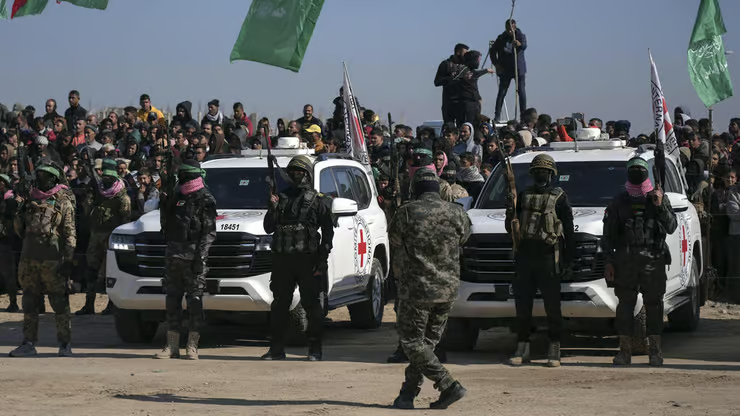
Hamas, or “The Islamic Resistance Movement,” is an extreme Islamic terrorist organization intended to establish a Palestinian religious state in place of Israel.
Hamas’s history began in 1987, during the First Intifada when it was founded by Ahmed Yassin and Abd al-Aziz al-Rantisi. It emerged from the Muslim Brotherhood movement – also considered a terrorist organization. Since its establishment, Hamas’s goal has been clear: armed resistance against Israel, with the organization’s 1988 charter declaring that the solution to the “Palestinian problem” is jihad – holy war.
Goals and Methods of Operation:
Hamas aims to establish an extreme Islamic state across all of Israel’s territory, “from the river to the sea” and to destroy the Jewish people.
Hamas operates through:
- Jihad: War against all non-Muslims.
- Dawa: “Education” and incitement aimed at bringing people closer to Islam and Hamas, convincing them of the righteousness of violent struggle against Israel, and encouraging violence against Israel.
- Military Wing – Izz ad-Din al-Qassam Brigades: Hamas’s army, funded by the movement’s money, sometimes through charity organizations, and used for violent struggle against Israel and building broad support for the organization, including among children.
Who controls the Gaza Strip?
Contrary to what the world thinks, Israel does not control the Gaza Strip. In 2006, Hamas won the Palestinian parliamentary elections, but serious disagreements with the Palestinian Authority led to internal conflicts. In 2007, Hamas forcibly took control of the Strip, ousted the Palestinian Authority, and has since been the sole ruler in the area. Hamas has turned the Gaza Strip into a central base for terrorist activities against Israel, including continuous rocket fire, construction of terror tunnels, and attempts to upgrade its military capabilities
-
Houthis
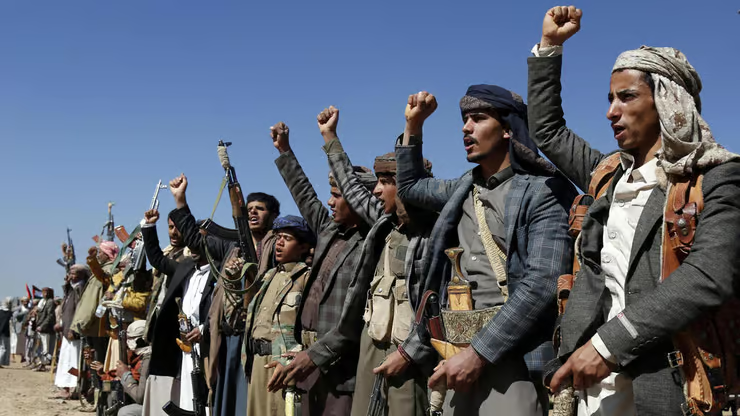
Meet the Houthis: The Houthis are a Shiite terrorist organization established in northwest Yemen in 1992 by Hussein al-Houthi. Today they are led by his son, Abd al-Malik al-Houthi. Their goal? To expand Shiite influence in Yemen and worldwide, while vehemently opposing Sunnis and Western powers.
What does their logo symbolize? The Houthis’ logo is much more than just a graphic design. It contains slogans that speak for themselves: “God is the Greatest” “Death to America” “Death to Israel” “Curse upon the Jews” “Victory for Islam” Not exactly a message of world peace. These slogans are effectively the movement’s mantra and represent their extreme ideology – anti-Western, anti-Israel, and antisemitic.
The Houthis’ Goals and Ideology: The Houthis aim to turn Yemen into a strong and influential Shiite stronghold. They want to impose their ideology on the country and eliminate any foreign influence, and they have a long list of enemies: Sunni countries (like Saudi Arabia), Sunni Muslim organizations (ISIS and Al-Qaeda), and of course – the United States and Israel.
Impressive Military Power – and What’s Behind It The Houthis have a large army – between 350,000 and 500,000 fighters – with advanced weapons, missiles, and drones. Who helps them behind the scenes is Iran, which provides them with both weapons and training through the Revolutionary Guards.
Houthis in the International Arena and the Iron Swords War During the Iron Swords War, the Houthis declared war on Israel, fired missiles at civilian targets in Israel, and supported Hamas and Hezbollah. They also attacked Western ships in the Red Sea, which led the United States to form a coalition to secure shipping routes in the area.
The Civil War in Yemen The Houthis, who began working to overthrow Yemen’s government as early as 2004, joined the “Arab Spring” waves in 2011 and through violent resistance contributed to the fall of the Yemeni government. In 2014, they captured Yemen’s capital, Sanaa, and declared a coup. Since then, Yemen has been mired in civil war. A coalition led by Saudi Arabia has been trying to push them out since 2015, but without success and the fighting continues to this day.
Systematic Human Rights Violators: The Houthis commit widespread human rights violations, including torture, exploitation of women and children, and enslavement of vulnerable groups. According to reports, they have revived slavery in Yemen – women are kidnapped and exploited as sex slaves and children are recruited to fight and used as human shields. Additionally, the Houthis are accused of using deadly landmines in civilian areas, diverting humanitarian aid for personal gain, and exploiting refugees and asylum seekers. They also persecute minorities, such as the LGBTQ+ community, punishing its members with prison sentences and even death.
What is the situation in Yemen today? The situation is very difficult: Yemen is one of the poorest countries in the world, with severe hunger, a shortage of water and medicine, and citizens struggling to survive. The UN defines the war there as the most severe humanitarian disaster in the world today.
Additional Links / References / Sources
https://www.shabak.gov.il/reports/terrororganizations/ https://he.wikipedia.org/wiki/%D7%97%D7%95%D7%AA%27%D7%99%D7%9D https://www.britannica.com/topic/Houthi-movement