Category: History
-

Israel-Egypt Peace
For three decades, Egypt was Israel’s greatest enemy. Four wars – from 1948 to 1973 – shaped the relations between the countries. Egypt did not recognize Israel, worked for its destruction, and supported terrorist actions against it. Egypt was among the initiators of the wars in 1948, 1956, and 1973, and in 1967 led together with Syria and Jordan to a significant military threat to Israel. But in 1977, the unbelievable happened: Egypt’s President, Anwar Sadat, landed in Israel and declared he was ready for peace.
From War to Peace: The Path to Agreement After the Yom Kippur War (1973), Egypt understood that continuing the conflict was not beneficial: the country was in economic crisis and needed American aid, and Sadat wanted to recover the Sinai Peninsula, which was captured in the Six-Day War (1967), and understood that the way to do this was through peace.
After secret contacts, mainly through the United States, Sadat announced in the Egyptian parliament his willingness to come to Jerusalem. Prime Minister Menachem Begin formally invited him – a step that broke the rules of the game in the Arab world. The announcement and the visit led to discussions at Camp David in 1978 until the agreement was signed in 1979.
The Peace Agreement: On March 26, 1979, the historic agreement was signed. Israel withdrew from Sinai – an area of about 61,000 square kilometers (almost 3 times the current size of Israel) – and in return, Egypt established diplomatic relations with it. The Gaza Strip remained outside the agreement, an issue that later affected regional security.
A central component of the agreement was the demilitarization of Sinai, where the Egyptian army was limited in its deployment under international supervision.
Opposition in the Arab World Sadat’s visit to Israel and the peace agreement sparked strong opposition in the Arab world. Egypt faced harsh criticism, was suspended from the Arab League, and many Arab countries cut off relations with it. In 1981, Sadat was assassinated by Egyptian extremists who opposed the agreement, but the agreement remained in place and continues to exist.
The Impact of the Agreement on Israel Despite the challenges, the agreement yielded significant achievements: quiet on the southern border, economic and security cooperation, and Egyptian mediation in regional conflicts.
October 7 and the Iron Swords War – A Test for the Agreement The events of October 7, 2023, in which Hamas carried out an unprecedented deadly attack on Israel, shook regional stability. Egypt, despite internal criticism of Israel, continued to serve as a mediator and increased enforcement at the Rafah border. The agreement remained in effect, but relations are under constant test.In conclusion: More than 40 years after its signing, the peace agreement with Egypt represents a breakthrough – it proved that peace is possible even after decades of war. The agreement still stands despite the complexity of relations and its effects on the Middle East.
-
The Six-Day War
In 1967, the Middle East was boiling. Arab nations united to eliminate Israel. Egypt, Jordan, and Syria signed a defense agreement, coordinated their moves, and began aggressive actions that threatened the young state of Israel.
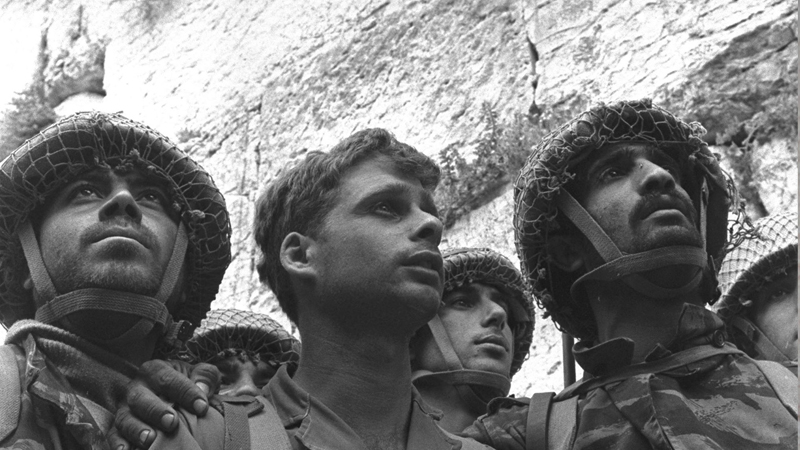
On the Jordanian front, Jerusalem was divided, and access to Jewish holy sites, primarily the Western Wall, was completely denied. Moreover, Jordanian soldiers conducted sniper fire against Israeli civilians, which increased tensions in the city.
In the north, Syria turned the Golan Heights into a base for attacks. It positioned artillery and rained shells on Israeli settlements in the Galilee. Additionally, it attempted to divert the Jordan River’s sources to dry Israel of water.
But the most dangerous front was in the south. Egypt, which led the Arab struggle, concentrated large military forces in the Sinai Peninsula, evacuated UN forces from the area, and blocked the Straits of Tiran – Israel’s vital maritime passage to the Indian Ocean. The blockade was seen as a declaration of war.
After a “waiting period” and many failed diplomatic attempts to prevent war, Israel understood that a combined confrontation from multiple fronts was inevitable and decided not to wait. On June 5, 1967, Israel preempted with “Operation Focus” – a precise air strike that destroyed most of the air forces of Egypt, Jordan, and Syria within hours. Israeli air superiority decided the battle.
Simultaneously, ground forces launched an offensive. Within days, the IDF conquered the Sinai Peninsula and reached the Suez Canal. On the Jordanian front, despite Israel’s attempts to avoid confrontation, Jordan opened fire along the entire front. In response, Israeli forces took control of Judea and Samaria and liberated Jerusalem, including the Western Wall and Temple Mount.
In the north, the Syrians continued to shell northern settlements, and toward the end of the war, the IDF launched an attack on the Golan Heights. Within just two days, the entire area was under Israeli control.
Just six days changed the map of the Middle East. Israel tripled its territory and captured the Sinai Peninsula, Gaza Strip, Judea and Samaria, Jerusalem, and the Golan Heights. The war strengthened Israel’s regional status and demonstrated its military power. However, it created a new political reality: the territories captured in the war remained at the center of the Israeli-Palestinian conflict to this day, raising questions of sovereignty, security, and future political solutions.
Furthermore, this overwhelming military victory changed the way the world views Israel – from a small state in danger of existence to a significant regional power. The war led to peace agreements with Egypt and Jordan but also to feelings of revenge and anger in the Arab world, which erupted again in the Yom Kippur War six years later.
The effects of the Six-Day War are still felt today – in Israel’s borders, its international status, and the security and political reality of the entire Middle East.
-

Peace Agreement Between Israel and Jordan
Peace Agreement Between Israel and Jordan: From Bloody Conflict to Security Cooperation On October 26, 1994, Israel and Jordan transformed from enemies to official neighbors. After decades of wars, confrontations, and secret channels, the moment arrived when handshakes replaced the thunder of cannons. But how did we get there?
Power Struggles and Missing the Palestinian Opportunity Since the War of Independence, Jordan controlled the West Bank but avoided establishing a Palestinian state – not out of generosity, but fearing Palestinians would replace the Hashemite leadership. In 1967, after being drawn into the Six-Day War, Jordan lost the West Bank and East Jerusalem to Israel. Jordan became fertile ground for Palestinian terrorism – until 1970 when King Hussein launched a brutal offensive against the PLO, expelled them to Lebanon, and made it clear: Jordan is a Jordanian state, not Palestinian. Despite this, Jordan continued to claim sovereignty over the West Bank until 1988, when it completely disengaged due to the Intifada and fears that Palestinian riots would spread to their territory.
Secret Diplomacy and the Missed Opportunity Despite tensions, Israel and Jordan conducted secret talks for years. In 1987, Shimon Peres and King Hussein agreed on the “London Agreement,” but Prime Minister Yitzhak Shamir opposed it and the agreement fell through. In the early 1990s, reality changed: the collapse of the Soviet Union, the impact of the Gulf War on Jordan’s economy, and the Oslo Accords gave momentum to reconciliation. With US support and promises of economic aid, Jordan moved rapidly toward an official peace agreement.
Key Elements of the Agreement – Official Peace, Mutual Interests The agreement established agreed borders, mainly in the Arava, regulated water resource distribution, and gave Jordan a special role in Jerusalem’s holy sites. Israel committed to respecting Jordanian sovereignty and cooperating in security, trade, and tourism. Jordan became the second Arab country, after Egypt (1979), to sign a peace treaty with Israel. The Arab world seethed. Syria and Iraq accused Jordan of treason, Palestinians were furious, and within the kingdom itself – the agreement was met with mixed feelings. Egypt preferred to remain neutral.
Relations Today – Cold Peace Economy and trade grew, but public support for the agreement in Jordan eroded. The Intifadas and conflicts with Palestinians distanced Jordanian public opinion from the idea of warm peace, and relations remained primarily interest-based.
October 7th and Cracks in the Alliance Since the “Iron Swords” war, Jordan has taken a hard line against Israel, condemned its actions in Gaza, and supported Palestinians. But beneath the surface – security cooperation and partnership continue. In April 2024, when Iran launched an unprecedented missile attack toward Israel, Jordan helped thwart the threat by shooting down missiles that entered its airspace – a move that reflected its strategic considerations and commitment to regional stability.
Legacy of the Agreement – Stable or in Danger? The peace agreement with Jordan is a reminder that the State of Israel is willing and prepared to reach agreements even with enemy states. The State of Israel is not fighting Islam or Arabs; it is fighting terrorist organizations and states that have made it their goal to eliminate the State of Israel.
-
Independence War 1947
In 1947, a series of significant events began that shaped the Middle East as we know it.
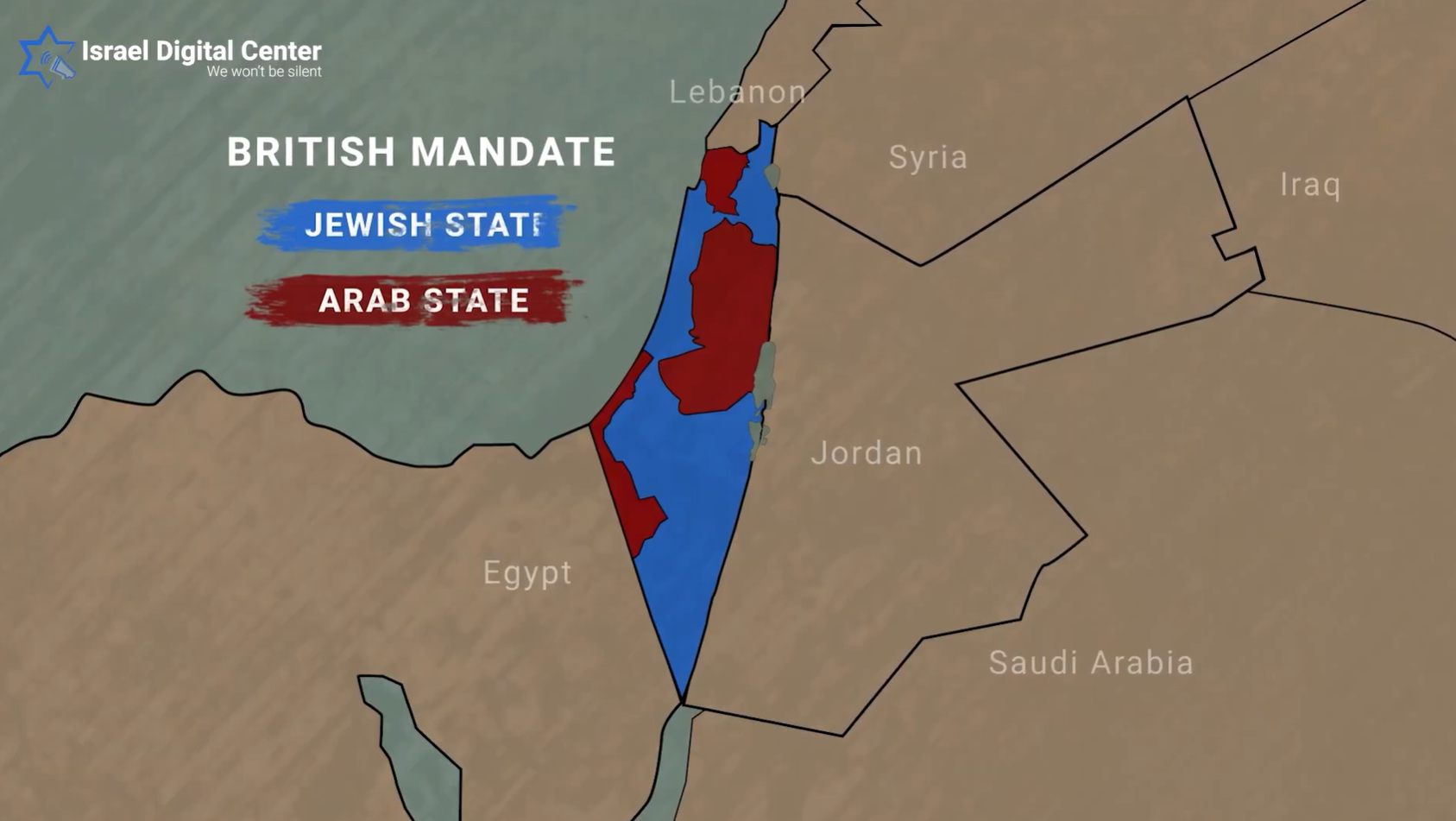
It started when the United Nations voted to split the British-controlled land into two states: one Jewish, one Arab.The Jewish population celebrated the UN’s decision, seeing it as a step toward their long-awaited state. However, the Arab side rejected the plan and responded with escalating violence against the Jewish population.
On May 14, 1948, Israel declared independence. The very next day, five Arab nations—Egypt, Jordan, Syria, Iraq, and Lebanon—invaded, and dragged Israel into a full-scale war for its survival.
The Arab nations’ attempt to prevent the establishment of Israel failed, and they ended up with less territory than they would have had if they had accepted the UN partition plan.
The war ended in 1949 with an Israeli victory, but the cost was enormous: over 6,000 Israelis—nearly 1% of the Jewish population—were killed. On the Arab side, the war was remembered as “The Nakba,” or “The Catastrophe,” marking a profound loss.
The War of Independence marked the beginning of a new chapter for Israel and the region—a chapter of triumph and tragedy, hope and loss. Its legacy remains a powerful force, shaping the present and the future.
The repeated refusal of the region’s Arabs to recognize the Jewish state led to a new chapter for the Middle East—one of triumph and tragedy, hope and loss. This legacy continues to shape the lives of millions to this day.